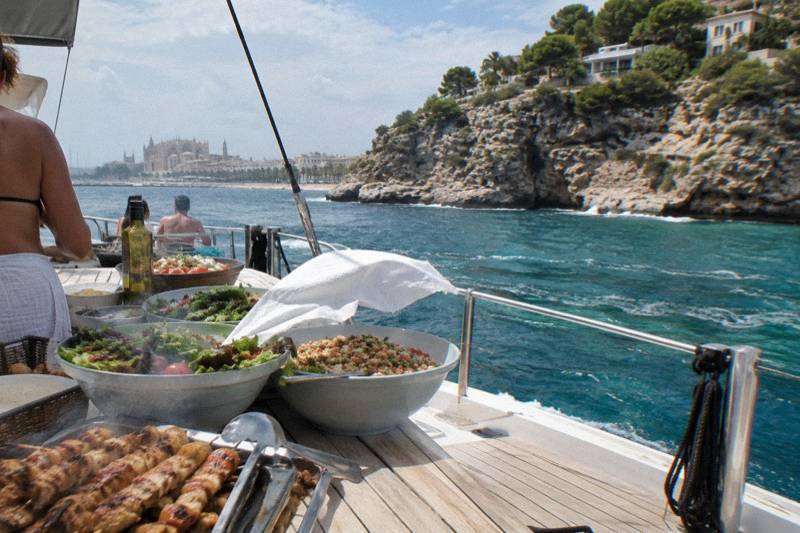
Seasickness And Sea Conditions On Mallorca Boat Tours
The swell question decides the booking for a lot of nervous sailors. Here is what the sea around Mallorca actually does, why a catamaran moves differently from a single-hull boat, and how warm the water is at the swim stop in every month of the year.
Short answer
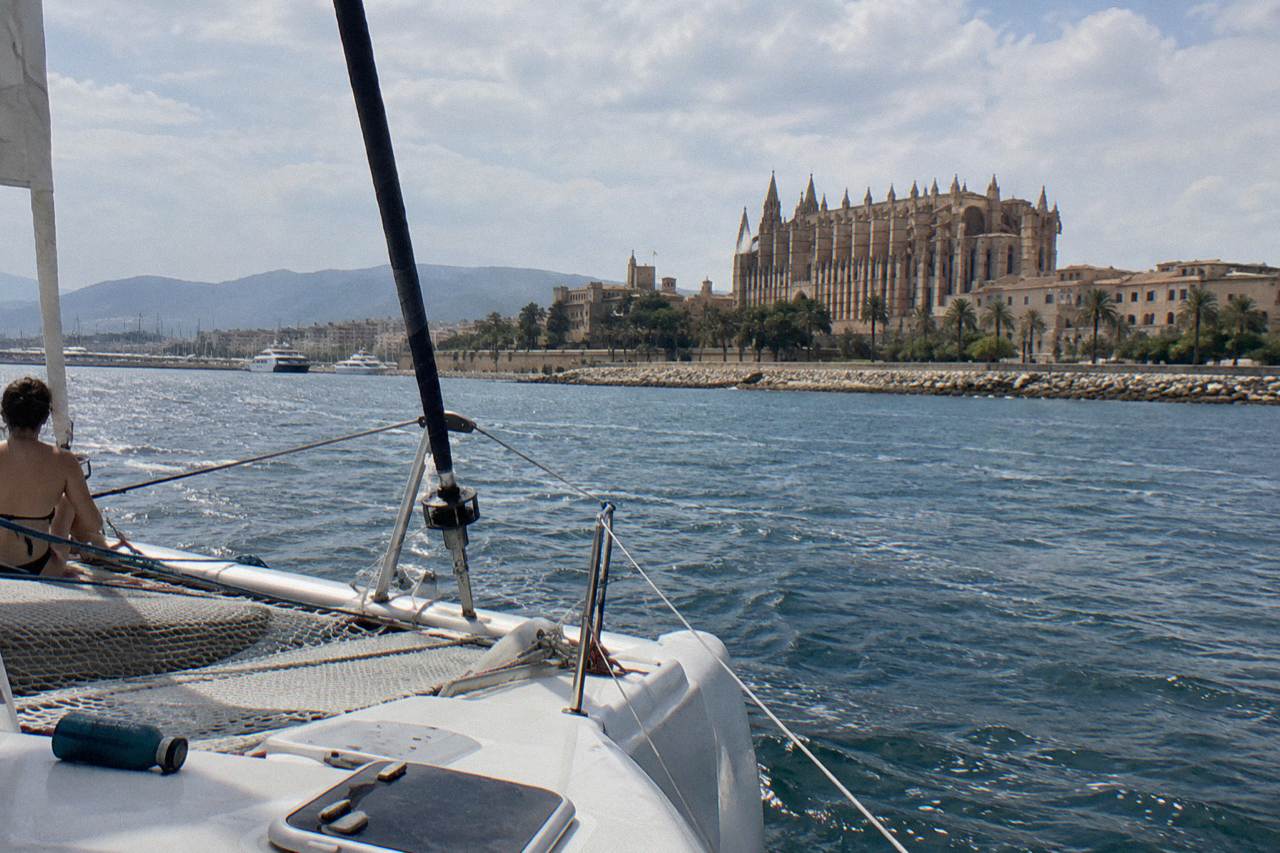
Catamarans have two hulls and a wide stance, so they roll less than single-hull boats of similar size, which is the main reason unsteady sailors prefer them. Average sea temperature near Palma runs from 13.9 degrees C in February to 26.0 in August. Shared Palma Bay catamaran sails covered here run from $44.82 to $102.44 per person.
The question that decides whether a nervous sailor books a boat trip in Mallorca is rarely the itinerary. It is the sea. Will the boat rock, will the water be warm enough to swim, and what happens if the weather turns on the day. Those three worries kill more bookings than price does, and they deserve straight answers rather than reassurance.
This guide works through them one at a time, using the listings covered here and the verified climate averages for the island. It also explains, in general terms, why catamarans move differently from single-hull boats, because that difference is the reason so many Mallorca day sails are catamarans in the first place. For a wider comparison of boat types, see catamaran versus sailboat versus speedboat, and for what to pack, the catamaran packing list guide covers it in detail.
Why Do Catamarans Feel Steadier Than Single-Hull Boats?
A catamaran carries two hulls joined by a wide deck, and that width is what reduces the sensation of motion: instead of pivoting on one hull like a monohull, the boat rests on two points set several metres apart, so it leans and rolls through a smaller angle in the same sea. The result is not the absence of movement, but movement that most people find easier to tolerate, which is why Mallorca's day-sail fleet leans heavily toward catamarans.
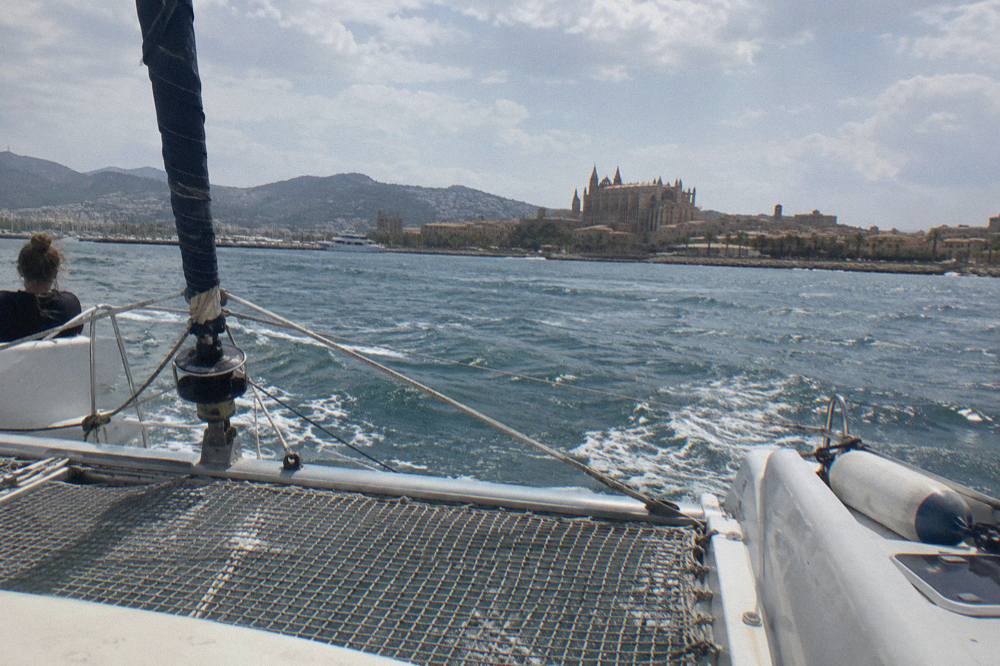
The physics is simple enough to be useful. A monohull is like a pencil balanced on its tip: it heels under sail and rolls with every passing wave. A catamaran is like a table with two legs at each end. The same wave has to lift one hull and drop the other before the deck tilts at all, and the deck itself stays closer to horizontal through the motion. None of the listings covered here promise flat seas or a motion-free ride, and no honest operator would, but the design genuinely changes how the same conditions feel.
There is a second, quieter advantage that matters to nervous sailors. Catamarans used for day tours tend to have wide, flat deck spaces, netting at the bow, and multiple places to sit, so guests can move to the part of the boat that suits them. Midships, low and centred, is where motion is usually least noticeable. The bow nets are the opposite: fun, but they move the most. If steady is the priority, pick a seat near the mast and amidships, and keep the horizon in view.
Every catamaran sail listed on Mallorca Katamaran Tours is a multihull departure by definition, so the comparison is not academic here. The trade-offs do exist: catamarans can slap in a short chop and they sail flatter rather than leaning, which some sailors miss. For a fuller treatment of how these hulls handle chop, the article are catamarans better in rough seas goes deeper than a planning guide can.
How Do Sea Conditions Differ Around The Island?
The listings covered here depart from four areas: Palma and its bay, Port d'Alcudia, Port de Pollenca, and Cala Ratjada on the east coast, and each faces a different stretch of water. Palma Bay is a broad, partly sheltered expanse in the island's south-west; the bays of Alcudia and Pollensa form the north coast's gentler corner; Cala Ratjada sits on the more exposed east. Swim stops happen in coves, not open sea.
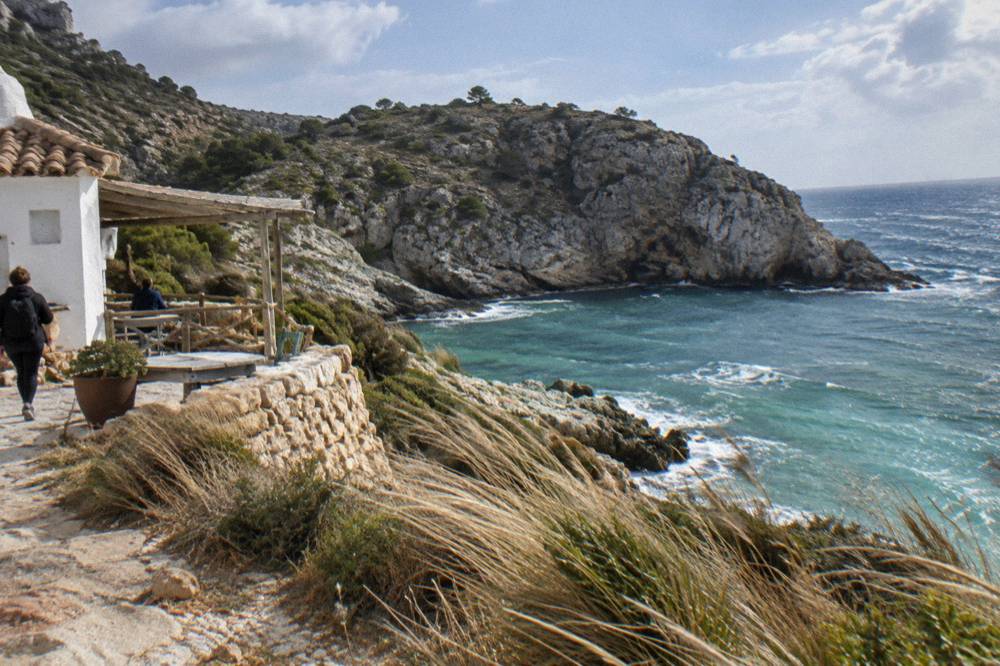
What that means in practice is that the route, not the departure port alone, shapes your day. The Palma Bay trips named here stop at coves such as Cala Vella and Cap Enderrocat, both inside or at the edge of the bay. Alcudia sailings reach Platja Des Coll Baix and Cala Murta, with some calling at Playa del Puerto de Pollensa. The Bay of Pollensa tour stops at Ses Caletes and Formentor itself. From Cala Ratjada, the day passes Capdepera, Cala Agulla and the coast rather than stopping to swim. A cove stop is by nature a sheltered stop, which is exactly why operators choose them.
There are rules that shape all of this, and they are worth knowing because they explain some of the behaviour you will see on the water. Anchoring on Posidonia seagrass meadows is banned in the Balearic Islands under Decret 25/2018, and the ban was reinforced nationwide by Spain's Real Decreto 191/2026. Authorised mooring buoys are the legal alternative, so crews pick their stopping places with that law in mind. A swim stop in Mallorca is therefore usually a buoyed or sandy-bottom anchorage rather than a drop-anywhere dip.
| Departure area | Water it faces | Named stops on the listings covered here |
|---|---|---|
| Palma (Muelle de Golondrinas, La Lonja, Paseo Maritimo piers) | Bay of Palma, south coast | Cala Vella, Cap Enderrocat |
| Port d'Alcudia | Bay of Alcudia, north-east toward Formentor | Platja Des Coll Baix, Aucanada lighthouse, Es Coll Baix, Playa de Formentor |
| Port de Pollenca | Bay of Pollensa | Ses Caletes, Bay of Pollensa |
| Cala Ratjada | East coast | Cala Agulla, Capdepera, Arta area, Llevant natural park |
One more layer of law protects the animals rather than the swimmers. Spain keeps boats at least 60 metres from cetaceans under Real Decreto 1727/2007, which sets a protection cylinder around any whale or dolphin group. Passengers do report bottlenose dolphins off the south-west of Mallorca on some boat trips, but no listing covered here departs on those routes, and no sailing can promise a sighting.
If a calmer, smaller-boat format appeals after all this, three small-group tapas cruises each run 4 hours, from $110.92 per person.
Formats vary. Small-group sails from Palma run from $125 and from $112.68 per person, while a private cove charter costs from $1,400.56 per group for the whole boat, up to 12 guests. The price bases differ, so compare like with like.
How Warm Is The Sea At Swim Stops Every Month?
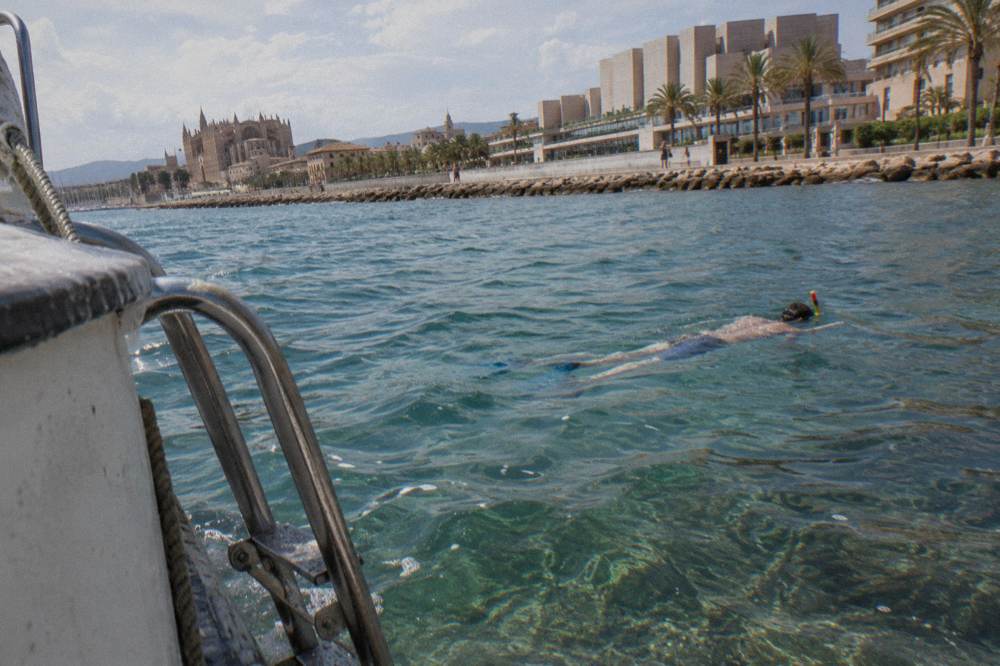
Average sea temperature near Palma ranges from 13.9 degrees C in February, the coolest month, to 26.0 degrees C in August, the warmest, with May through October all averaging 18.9 degrees or warmer. Those are monthly averages, not a promise for your date, but they tell you when a swim stop is pleasant, when it is bracing, and when it is genuinely cold for most people.

The shape of the year matters more than any single number. The sea is slow to warm and slow to cool, so June feels cooler than the air but September often feels warmer than you expect. Spring swimmers face the year's coldest water in February and March, when the average sits around 14 degrees, while late-summer and early-autumn visitors get the most comfortable swimming of the year at 25 to 26 degrees. If the swim stop is the point of the trip for you, the best time for a catamaran tour guide lines the sea temperatures up against sunset times and the rest of the calendar.
| Month | Average sea temperature near Palma (degrees C) | What it means for a swim stop |
|---|---|---|
| January | 14.4 | Short dips only for most people |
| February | 13.9 | Coolest month of the year |
| March | 14.1 | Still cold; wetsuit territory |
| April | 15.9 | Bracing |
| May | 18.9 | Fresh but swimmable |
| June | 22.5 | Comfortable |
| July | 24.8 | Warm |
| August | 26.0 | Warmest month of the year |
| September | 25.1 | Warm, and the air is gentler |
| October | 22.7 | Still comfortable |
| November | 19.7 | Fresh |
| December | 16.3 | Cold for most |
Swim stops appear on many of the shared Palma bay cruises and on the Alcudia and Pollensa trips. Among the private options, the solar-powered cruise names its stops, Illetas, Cala Comtesa and Punta Negra, and lists snorkel equipment. The half-day Formentor beach visit, by contrast, lists a beach stop rather than a boat swim stop. On the small-group tapas cruise, snorkel equipment is a listed inclusion on a 4-hour sail from D-Marin Palma Cuarentena with up to 12 guests, from $125 per person. It is rated 4.8 from 649 reviews. If that format sounds right, the Small Group, Homemade Tapas link sits beside the site's small-group tapas cruise page.
What Happens When Weather Cancels A Trip?
If weather cancels your boat trip, what happens next depends on the specific listing you book, since there is no island-wide rule: free cancellation appears on the large majority of shared Palma Bay and north-coast sails covered here, but not on all of them, so read the listing you are actually booking rather than assuming. An operator's weather cancellation is also a separate matter from your own free-cancellation window.
The practical distinction to hold onto is this. Free cancellation, where listed, refers to your right to cancel before the trip, usually up to some number of hours before departure, and the listing states the exact terms. Weather cancellation is the operator calling the day off because the sea or visibility makes the trip unwise. In that case you are not choosing to cancel, and the remedy is a reschedule or refund through the listing; the listing's own policy governs it. Two examples of the spread: the Palma cruise with swimming and snorkelling lists free cancellation, while the Bay of Pollensa tour leaves it unstated.
Nobody can promise you a given day's conditions, and this guide will not try. Weather can cancel catamaran trips. Each live listing shows the operator's policy, and swim stops depend on coves being settled enough to anchor safely. If your trip is cancelled, the reschedule or refund happens through that same listing.
Choosing a sail while weighing sea comfort still comes down to price and format, from a $44.82 shared swim-and-snorkel cruise to charters priced per group.
The luxury tour above is the most reviewed listing covered here, 4.5 from 3,654 reviews, from $61.62 per person for a 5-hour morning or 4-hour sunset sail with a gourmet buffet, a swim stop at Cala Vella and an onboard DJ. Water comes with the meal; bar drinks are extra, and snorkel gear is sold onboard for EUR 20, as the listing states.
Which Piers And Ports Are The Steadiest To Depart From?
All four departure areas used by the listings covered here sit inside working harbours or sheltered bays: Muelle de Golondrinas and La Lonja in Palma, the Passeig Maritim piers at Port d'Alcudia, the Muelle Nuevo at Port de Pollenca, and the pier at Cala Ratjada. The boarding and harbour-exit phase of any trip is therefore the calmest part of it, in general terms, before the boat reaches open water.
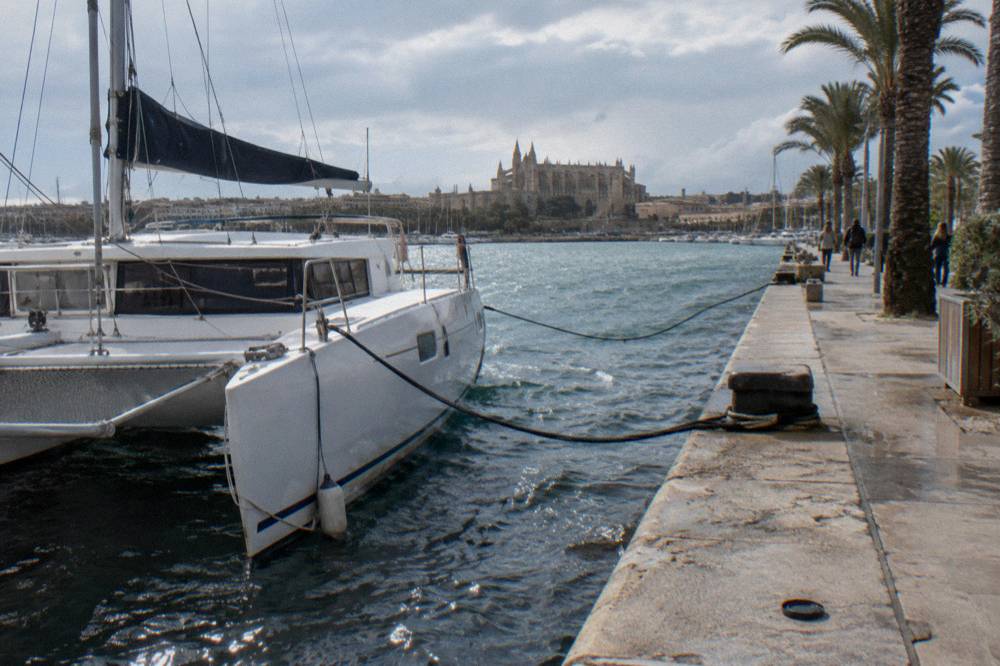
Palma deserves a special note because so many departures cluster there, and because its waterfront has changed. The Paseo Maritimo redevelopment, 3.5 kilometres long, removed traffic lanes and added more than 1,800 trees and roughly 70 percent more pedestrian and green space, and it has won a national sustainable construction prize. Several listed departures leave from this stretch, including the Muelle de Golondrinas pier used by both the luxury tour with DJ and the Oasis Catamaran aperitif sail, and the La Lonja Marina Charter dock used by the tapas trips.
The port authority has also reportedly excluded party boats from the new Muelle de las Golondrinas concession, which is background colour rather than something to plan around, since no claim is made here about which listings are affected. For the type of sail that sits at the other end of the spectrum from a party boat, the small-group tapas category covers the quieter formats.
| Listing | Departure point | Area | Duration |
|---|---|---|---|
| Catamaran Luxury Tour with Meal and DJ | Muelle Golondrina, Palma | Palma | 5 hours (morning) or 4 hours (sunset) |
| Deluxe Catamaran with Snacks, Drink, SUP and Snorkeling | Muelle de Golondrinas, Palma | Palma | About 4 hours |
| Catamaran Cruise from Port d'Alcudia with Lunch and Swim Stop | Transports Maritims BRISA pier, Port d'Alcudia | North coast | 5 hours |
| Catamaran Tour in the Bay of Pollensa | Muelle Nuevo, Port de Pollenca | North coast | 4 hours 30 minutes |
| Day Catamaran Trip: Cap des Freus and Llevant Natural Park | Pier of Cala Ratjada | East coast | 4 hours |
The north-coast pair deserves its own note. The bays of Alcudia and Pollensa are shallow and partly enclosed, which in general terms makes them among the calmer stretches of Mallorcan water for anyone nervous about swell. The Alcudia cruise, 4.0 from 82 reviews at from $82 per person, serves lunch with drinks on the table, and its route calls at Platja Des Coll Baix and the Playa del Puerto de Pollensa.
How Can You Reduce Motion Worries Before You Board?
Practical steps that help most people: book a catamaran rather than a single-hull boat, choose a seat low and central rather than on the bow nets, keep your eyes on the horizon, eat something plain beforehand rather than sailing on an empty stomach, and stay hydrated with water rather than alcohol. For medication or stronger remedies, ask a pharmacist before the day; this guide does not give medical advice.
None of that is specific to Mallorca, and none of it is a guarantee, but the first item does most of the work. Beyond it, the format of the trip matters: a short sail is a smaller commitment for a first-timer than a long one. The Palma cruise with swimming and snorkelling runs 2 to 4 hours, from $44.82 per person, rated 4.3 across 3,255 reviews, which makes it the shortest listing covered here. If the sea disagrees with you, a couple of hours on it is easier to shrug off than a full day.
Timing helps too, though the guide will not pretend to forecast any given day. Sunset options, like the 4-hour sunset version of the luxury tour, are a popular way to combine a shorter time on the water with the best light of the day; sunset in Palma on the 15th of the month ranges from 9:18 pm in June to 5:26 pm in December, so a "sunset sail" is a very different trip in midwinter than at midsummer. The sunset catamaran guide lines up the listings against those times month by month.
A last note on swim-stop safety, because sea conditions include what is in the water as well as what the water is doing. General Mallorca beach flags: green means swimming is fine, yellow means caution, red means no swimming, and a white flag with a jellyfish icon signals jellyfish presence; lifeguard flags and signage apply locally at each beach. If stung, rinse with seawater only. Swimmer safety zones also keep boats under 3 knots within 200 metres of beaches and 50 metres of the coast, which is why the boat anchors or holds position outside the swimming area and you walk, float or swim in from there.
Do You Need To Plan Around Sea Conditions At All?
For a shared catamaran day sail in Mallorca, the honest answer is: far less than you fear, and a little more than nothing. The boat type, the cove-based swim stops and the operators' own interest in comfortable conditions do most of the planning for you. What remains for you is choosing the month, choosing the duration, reading the cancellation terms on the listing, and knowing where to sit once aboard.
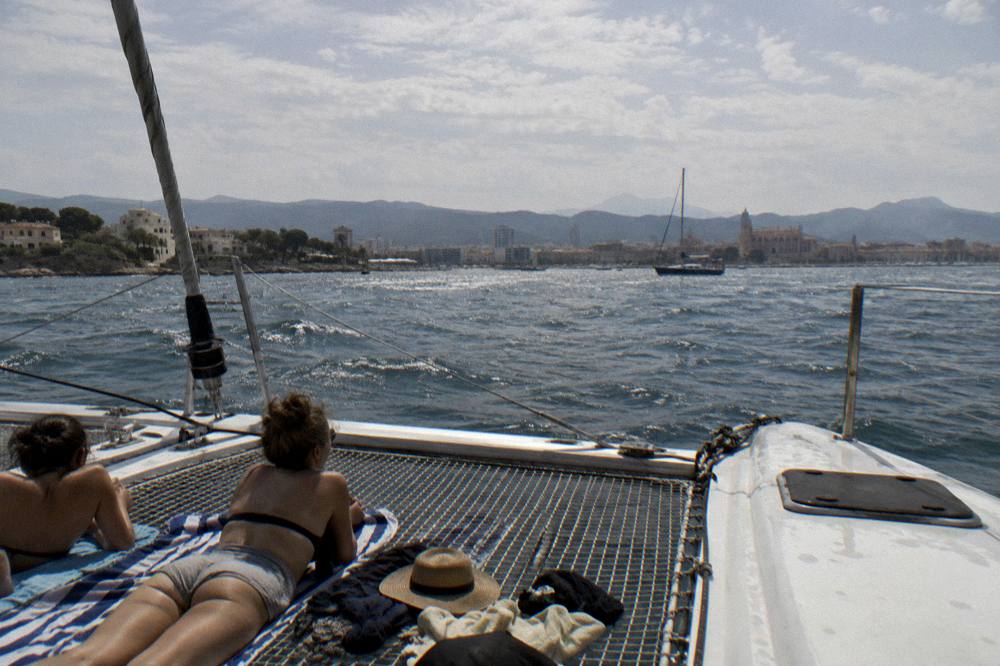
Put the pieces together and a pattern emerges. Pick a month with sea temperatures you will enjoy, which for most people means May through October, averaging 18.9 degrees C or warmer near Palma. Pick a duration that matches your confidence, from the 2-to-4-hour Palma cruise to the 4-hour aperitif-plus-BBQ Oasis sail at from $102.44 per person, 4.6 from 55 reviews. Read the specific listing's cancellation line before booking, because "free cancellation listed" on one tour tells you nothing about the next. Then let the crew handle the sea itself; that is what the skipper is there for.
The comparison across formats, prices and durations lives in the best catamaran tours in Mallorca guide, and the straight cost breakdown is in Mallorca boat tour prices. For seasickness specifically, the pharmacists of Palma have heard the question a thousand times, and a word with one costs nothing.
Before you go, the choice comes down to company and budget: a shared cruise, a small-group sail, or a private charter.
Common Questions About Seasickness And Sea Conditions
Are Catamarans Better If You Get Seasick?
In general terms, yes. A catamaran's two hulls sit wide apart, so it rolls through smaller angles than a single-hull boat in the same sea. That reduces the motion most people find hardest to tolerate. It does not remove motion, and no listing promises calm conditions, but the design is a real advantage for unsteady sailors.
How Warm Is The Sea In Mallorca For Swimming?
Average sea temperature near Palma runs from 13.9 degrees C in February, the coolest month, to 26.0 degrees C in August, the warmest. May through October all average 18.9 degrees or warmer. These are monthly averages, not a forecast for any given day, so treat them as a planning guide rather than a promise.
What Happens If Weather Cancels My Catamaran Tour?
Weather can cancel any boat trip, and the specific listing shows the policy for the tour you book. Operator cancellation for weather is handled through the listing as a reschedule or refund. Free cancellation, where listed, covers your own cancellation before the trip, so read the terms on the listing you are booking.
Which Catamaran Tours Are The Shortest For Nervous Sailors?
The shortest listing covered here is the Palma catamaran cruise with swimming and snorkelling, 2 to 4 hours, from $44.82 per person, 4.3 from 3,255 reviews, with free cancellation. The 4-hour sunset option of the luxury tour, from $61.62 per person, is another short-format choice with a swim stop at Cala Vella.
Do Mallorca Catamaran Tours Stop For Swimming In Winter?
Season dates vary by listing, so confirm on the live booking page when each tour runs and whether a swim stop is included. Whether swimming is pleasant depends on the sea temperature: the winter average near Palma is 14 to 16 degrees C, which most people find cold. Whether the swim stop runs in winter depends on the listing; getting in is up to you.