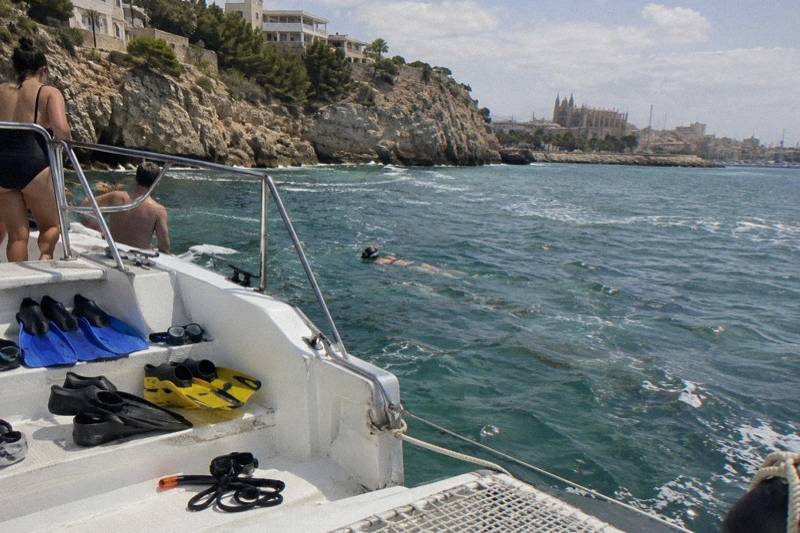
What To Wear And Bring On A Mallorca Catamaran Tour
Most of what people panic-pack for a boat day is already on board. The listings covered here state their inclusions and exclusions in detail, and this guide turns those lines into a packing list: what to wear, what to bring, and what to leave behind because it costs a few euros on board anyway.
Short answer
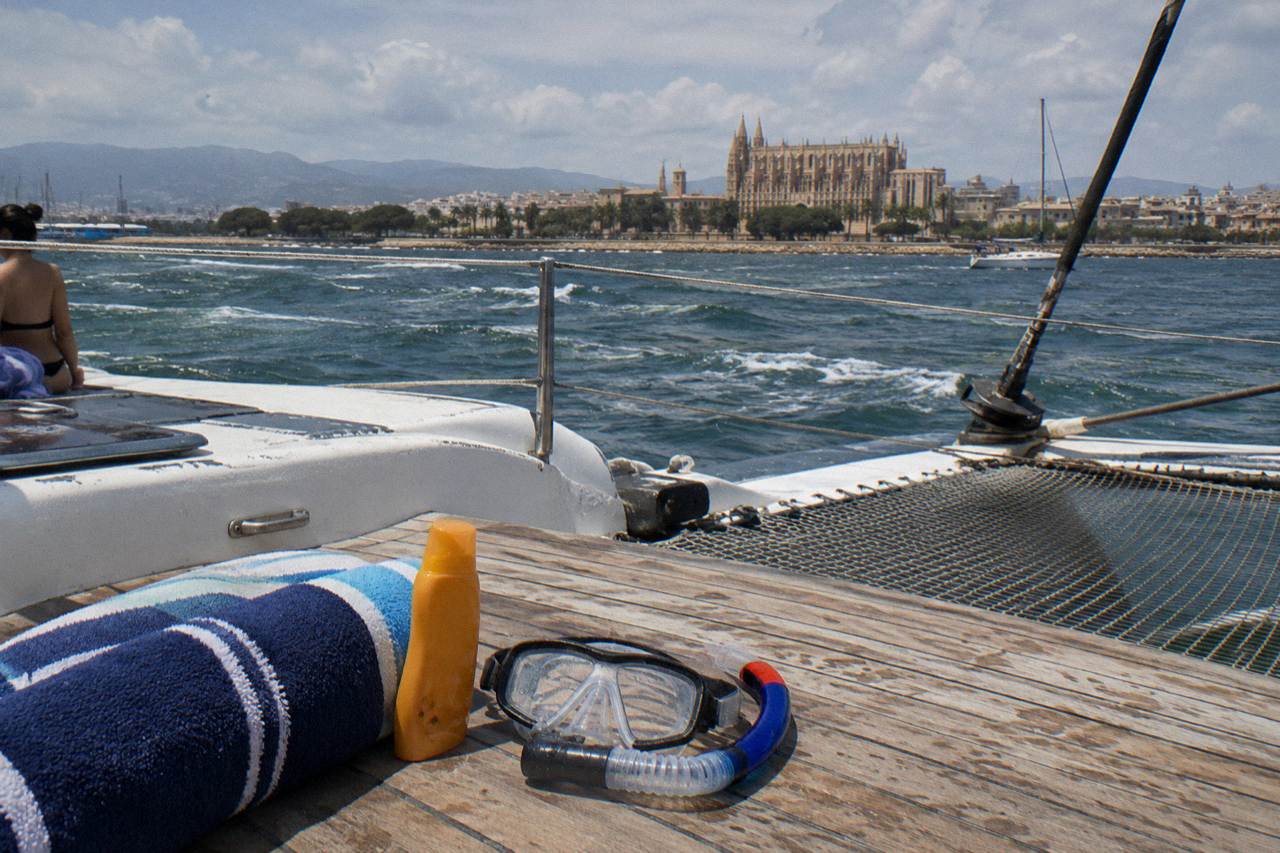
Bring a swimsuit, a dry change of clothes, sun protection and a towel. Palma Bay sails run from $44.82 to $102.44 per person, and many include snorkel gear, meals and drinks, but towels, bar drinks and some snorkel rentals are listed exclusions. A small dry bag and reef-safe sunscreen cover the rest.
A catamaran day in Mallorca is mostly a beach day that moves. You will swim, eat, stand in the sun for hours and get salt on everything, so the packing question is less "what do I need" and more "what does the boat already have." Each tour page spells out its own inclusions and exclusions, from the BBQ sails to the tapas cruises, and those lines beat generic packing advice, because they tell you exactly where your money stops. The Gourmet Buffet tour from Palma, for instance, lists a full buffet with vegetarian and vegan options but sells snorkel gear on board for €20 and towels for €8. That single line saves you from carrying gear you could rent and from assuming a towel waits at your seat.
This guide works through the practical questions in order: clothing, provided equipment, food and drink, sea temperatures, kids, private charters and the boarding walk itself. Where a fact comes from a listing, it says so. Where something varies between operators, it names the operators rather than guessing.
What Should You Wear On A Catamaran In Mallorca?
Wear a swimsuit under light, dry-friendly clothing, with a layer for the sail back and flat shoes you can slip off at the gangplank. Most catamarans here include a swim stop, so the suit is not optional on those, and the return leg after a swim is when people get cold, not during the midday crossing. A cap and sunglasses complete the basics.
There is no dress code on any listing covered here, so the practical logic drives everything. Catamarans move steadily, decks are wide and stable, and you will be barefoot for most of the trip: crew generally ask for shoes off at the boarding point to keep decks clean, so flip-flops or espadrilles beat anything with laces. A dry t-shirt or light long-sleeve matters more than people expect. The sun on open water is constant, and the wind on the way back to Palma or Port d'Alcudia can feel cool against wet skin even in summer.
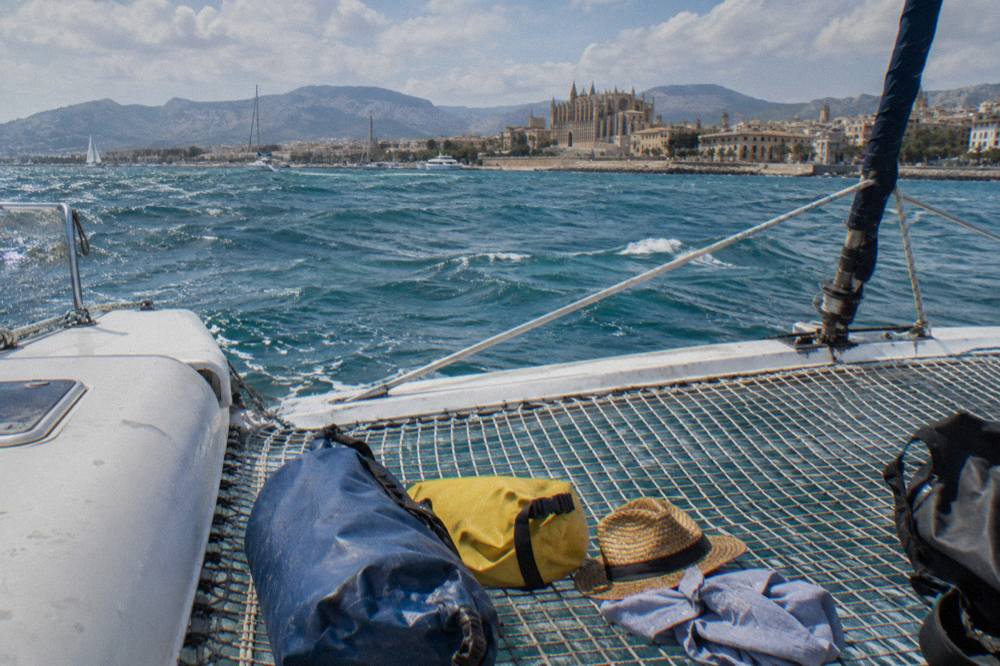
Think in layers you can shed. Board in shorts, a shirt and the swimsuit underneath. After the swim stop, put the dry layer back on before the sail home. A zip-top dry bag, even a small one, is the single most useful item on this list: it keeps a phone, documents and the dry layer separate from everything that gets wet. Plastic bags work in a pinch but tear.
One clothing note specific to sunset options: the sunset departure of the Gourmet Buffet tour runs 4 hours against 5 for the morning, and evening air on the water cools quickly. The same applies to the 4-hour Aperitif Plus BBQ Sail, which returns after the second stop. A warm layer earns its space on any trip ending after early evening, and the monthly sunset times matter here: in Palma, the sun sets at 9:18 pm in mid-June but 5:26 pm in mid-December, so a December evening sail is a different clothing problem entirely.
What Do The Catamaran Tours Already Provide?
Most of the shared sails from Palma, Port d'Alcudia and Port de Pollenca list snorkel equipment, a meal and at least some drinks as included, so the boat covers the expensive half of your day. What the listings exclude, mostly, is bar drinks beyond the included ones; towels appear as an exclusion or paid extra on just two shared tours, and one Palma trip charges €20 for snorkel gear and €8 for towels. Read your specific listing's line before packing.
The detail is in the individual listings, and they differ enough to change what you carry. The swimming and snorkelling cruise from Arenal lists snorkeling equipment, life vests, and a BBQ option with water, beer or sangria, all on the inclusions line. The Deluxe Catamaran from the Muelle de Golondrinas adds welcome cava or juice, tapas, paddleboards and snorkel gear. The Premium Catamaran from Sa Calma Boats includes catering, one drink, water slides and snorkel gear with a €10 deposit. The 5-hour Magic Catamarans lunch or dinner trip lists soft drinks, juice, water, coffee, and wine and sangria with the meal, snorkel gear with a deposit, and swimming vests.
Here is the honest summary of what the shared Palma Bay listings state, listing by listing, so you can match your packing to the trip you actually booked:
| Listing (decision name) | Included gear | Included food and drink | Listed extras you pay for |
|---|---|---|---|
| Gourmet Buffet, Morning or Sunset | Swim stop, photographer | Gourmet buffet with vegan options, water with meal, DJ | Snorkel gear €20, towels €8, bar drinks |
| Swim and Snorkel, Optional BBQ | Snorkel gear, life vests, BBQ option | BBQ with water, beer or sangria if selected | Nothing listed |
| Electric Catamaran, Tapas and Drink | SUP, snorkel gear, lifejacket | Welcome cava or juice, tapas, water | Extra drinks, underwater scooters, VIP seats |
| Onboard Catering, Optional VIP Area | Water slides, snorkel gear (€10 deposit) | Catering plus one drink | Premium drinks, towels outside VIP |
| Sailing Catamaran, Lunch or Dinner | Snorkel gear (deposit), swim vests | BBQ meal, soft drinks, wine and sangria | Nothing listed |
Two patterns stand out. First, when a listing includes snorkel gear, it often carries a small deposit, so bring a coin or a card for that. Second, the gap between "drinks included" and "bar drinks excluded" is where most on-board spending happens. The Gourmet Buffet tour includes water with the meal and sells everything else; the Magic Catamarans trip pours wine and sangria at the table. If that difference matters to your budget, it is worth reading the exclusions line of your own listing before you decide whether to bring a water bottle.
The small-group tapas sails run from $110.92 to $125 per person and take at most 12 guests each; all three list snorkel gear and SUP use, and the two Sailpalma departures include a welcome drink and water with alcoholic drinks sold separately. For more on how those smaller trips differ from the big-deck sails, see the small group versus big boat comparison.
Do You Need To Bring Snorkel Gear And Towels?
Only two of the Palma Bay listings treat snorkel gear as a paid extra, and only two shared sails list towels as an exclusion or paid extra, most never mention them, so the short answer is: bring the towel, and bring your own mask only if the fit matters to you or your listing sells gear on board. The Gourmet Buffet tour charges €20 for snorkel gear and €8 for towels, both stated on the listing.
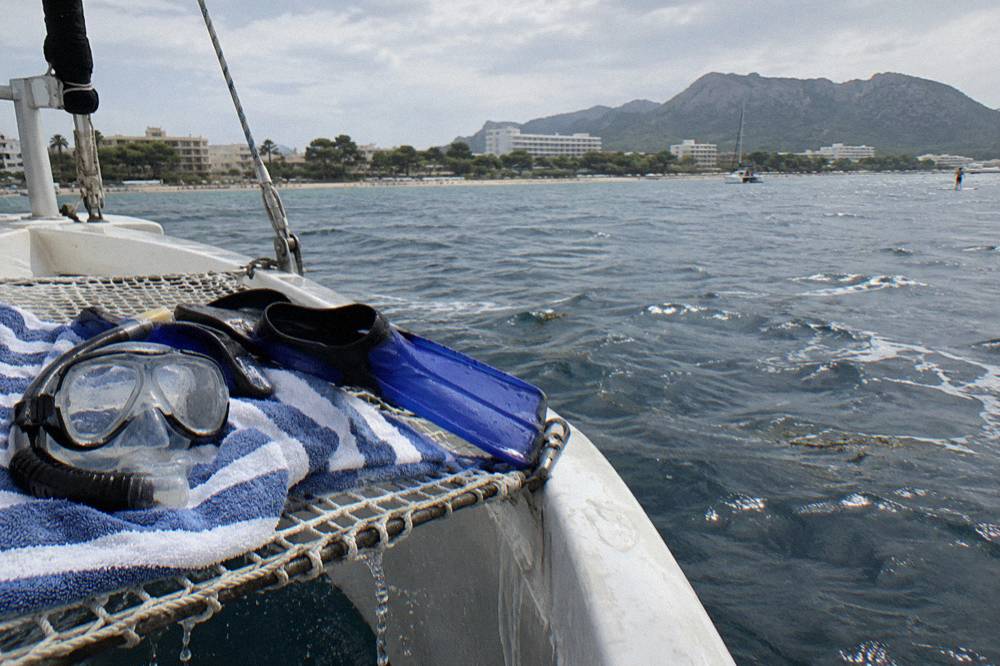
Snorkel gear is personal equipment and fit is individual. Rental masks on busy boats get heavy use, and if you wear glasses or have a face shape that cheap skirts leak around, a brought-from-home mask changes the whole swim stop. On the Palma snorkelling cruise and the Deluxe catamaran with SUP, gear comes included or is sold on board, so a single day rarely justifies buying your own, though comfort is a fair reason to carry it. Fins are almost never worth packing: the stops are calm coves where you float rather than sprint.
Towels are the item people forget. The Deluxe Catamaran listing includes no towel service; the Premium Catamaran trip explicitly excludes towels outside the VIP area; the Gourmet Buffet tour sells them at €8. Pack one towel per person, in a dry bag, and pack it at the top. A second thin microfibre towel costs nothing in weight and dries fast enough to use again at the hotel.
One equipment note that is not about packing but affects the swim: anchoring on Posidonia seagrass meadows is banned in the Balearic Islands under Decret 25/2018, a rule reinforced nationally by Spain's Real Decreto 191/2026. Boats therefore moor at authorised buoys or anchor on sand, the only legal options since anchoring on the seagrass is banned. Your gear does not change this, but knowing it explains the stops.
What About Food, Drinks And Sunscreen On Board?
Meals are covered on many of the shared trips, from the buffet on the Attraction Catamarans luxury tour to BBQ on the Oasis Catamaran sails and chicken-and-sausage lunches on the Alcudia cruises, so snacks matter mainly for a fussy eater or a dietary need the listing does not name. Drinks vary sharply: some include wine and sangria, one includes water only. Sunscreen is never provided, bring your own, and reapply at sea.
The meal situation is genuinely good across the board. The Alcudia lunch cruise serves chicken, sausage, salad, pasta and fruit with water, soft drinks, beer and sangria. The Pollensa Bay trip lists pasta salad, chicken, salami, cheese, Mallorcan bread and fruit with drinks at lunch. The Cala Ratjada east-coast trip includes a traditional Mallorcan barbecue lunch with trempó salad and tumbet per the Spanish listing, with water and soft drinks included at lunch. Two listings state no meal: the Formentor beach excursion at $45.55 per person, and the private solar catamaran charter. If yours is either, pack lunch. Everything else covered here is indexed on Mallorca Katamaran Tours.
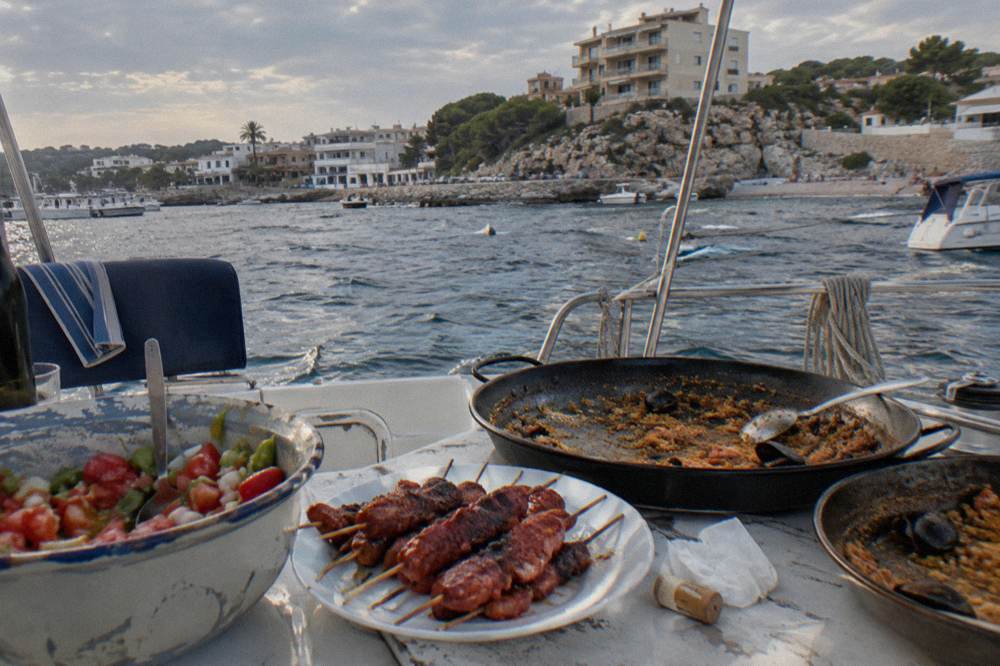
The Electric Catamaran tapas trip is the one to pick if food is the point of the day: it lists fresh local products with vegetarian and vegan options, a welcome cava or juice, paddleboards and a premium electric vessel, from $85.15 per person. Read more in the catamaran tours with lunch and tapas guide.
Sunscreen deserves its own paragraph. Reflection off the water and the deck means you burn faster than on a beach, and a 4-to-5-hour trip is long enough for a serious burn. Bring a high-factor sunscreen, apply before boarding, and reapply after the swim stop. A lip balm with SPF, a cap that will not blow off, and sunglasses with a retainer cord cover the rest of the sun problem. The listings say nothing about sunscreen types, and there is no local regulation to cite here, so treat this as ordinary sun sense rather than rule-following.
Water deserves a final note. Some listings include water throughout the trip, some only with the meal, and the Gourmet Buffet tour lists bar drinks as a paid extra. A one-litre bottle per person in your bag costs nothing and removes the dependency entirely.
How Warm Is The Sea At The Swim Stops?
Average sea temperature near Palma runs from 13.9 degrees Celsius in February to 26.0 in August, with May at 18.9 and October at 22.7, so the swim stop is comfortably warm from June through September and bracing in the shoulder months. These are monthly averages, not a forecast for your date, so a shorty wetsuit is a personal call for April, May and late October.
The numbers, by monthly average near Palma:
| Month | Average sea temp (C) | Month | Average sea temp (C) |
|---|---|---|---|
| January | 14.4 | July | 24.8 |
| February | 13.9 | August | 26.0 |
| March | 14.1 | September | 25.1 |
| April | 15.9 | October | 22.7 |
| May | 18.9 | November | 19.7 |
| June | 22.5 | December | 16.3 |

What this means for packing is simple. In July and August, a swimsuit is enough and the swim stop is the best hour of the day. In June and September, the water is still warm and the air is pleasant. In May and October, bring the towel and the dry layer, because the contrast between a 22.7-degree sea and an October breeze on wet skin is real. From November to April, the listings remain bookable but the swim stop becomes a quick dip for the determined, and you should pack accordingly. For how this fits the wider calendar, the best time for a catamaran tour guide breaks down the year in detail.
What Should You Pack For Children On A Catamaran?
Pack for kids as you would for a long beach day plus a nap: swimsuits, rash vests for sun, their own snorkel mask if they have one, snacks they will actually eat, and a dry change. The Arenal cruise lists life vests and snorkel gear and takes up to 100 guests, while the small-group tapas sails cap at 12, a very different environment for a child.
The life-vest question comes up constantly. The Arenal swimming and snorkelling cruise lists life vests on its inclusions line, and the Magic Catamarans lunch trip lists swimming vests and floating equipment, so flotation for non-swimmers is present on those named trips. That is a listing-by-listing fact, not a general one, and the listing you booked is the authority. A child who is not a confident swimmer should have a vest on from the moment the boat stops, cove or not, and swimmer safety rules keep boats at low speed near beaches in any case.
The environment choice matters as much as the packing. A big catamaran with water slides, as on the Premium Catamaran trip, gives children a lot of boat to burn energy on, while a 12-guest tapas sail is quieter, closer to the water and over in 4 hours. The catamaran with kids guide works through that trade-off. Whatever the boat, the items that consistently earn their place are a rash vest (sun protection that does not wash off), a wide-brim hat with a chin cord, dry snacks, and a phone or camera in a floatable case, because children drop things overboard at a statistically impressive rate.
One medical note: if stings are a concern, general Mallorca beach guidance uses a white flag with a jellyfish icon at lifeguarded beaches, and the standard first aid for a sting is rinsing with seawater only, never fresh water. Bring a small basic kit, paracetamol, plasters, motion-sickness remedy, but a jellyfish flag at a swim-stop cove is a crew decision, not a packing problem.
What Do You Bring For A Private Catamaran Charter?
For a private charter the boat is yours, from $1,389.36 to $1,877.98 per group for the whole vessel, and what you bring depends on the catering line: the aperitif charter includes tapas, snorkeling and paddle surfing but its bar service and drinks are not included, the eco solar charter includes snacks, soft drinks and an underwater scooter, and cava and wine cost extra. Towels are excluded on the coves charter, so bring your own.
Private charters flip the packing logic, because a per-group price buys the whole boat for up to 12 guests and the questions become about your group rather than the operator's crowd. The aperitif charter from Marina Palma Cuarentena lists private sailing, tapas, snorkeling and paddle surfing with a sunset experience. Drinks are not included and are sold through the onboard bar, so the classic move is to check whether your group can bring its own drinks: the small-group tapas listings explicitly ban own drinks except water, but the private listings state no such ban. Where a listing is silent, ask the operator before assuming.
The eco charters are the most self-contained: the Eco Experience lists homemade snacks and fruits, still and sparkling water, cola, lemonade soft drinks, snorkelling gear and an underwater sea scooter, with beers, cava and white wine at extra cost. The solar-powered Palma Bay private cruise lists so few inclusions that a call to the operator about catering is genuinely part of the packing process.
For a private group, the practical extras are a Bluetooth speaker only if the listing mentions a music system, a change of clothes per guest, more water than seems reasonable, and a plan for the sunset if the charter includes one. Mid-June gives you a 9:18 pm sunset in Palma; mid-December, 5:26 pm. The private charter prices guide compares all four per-group options.
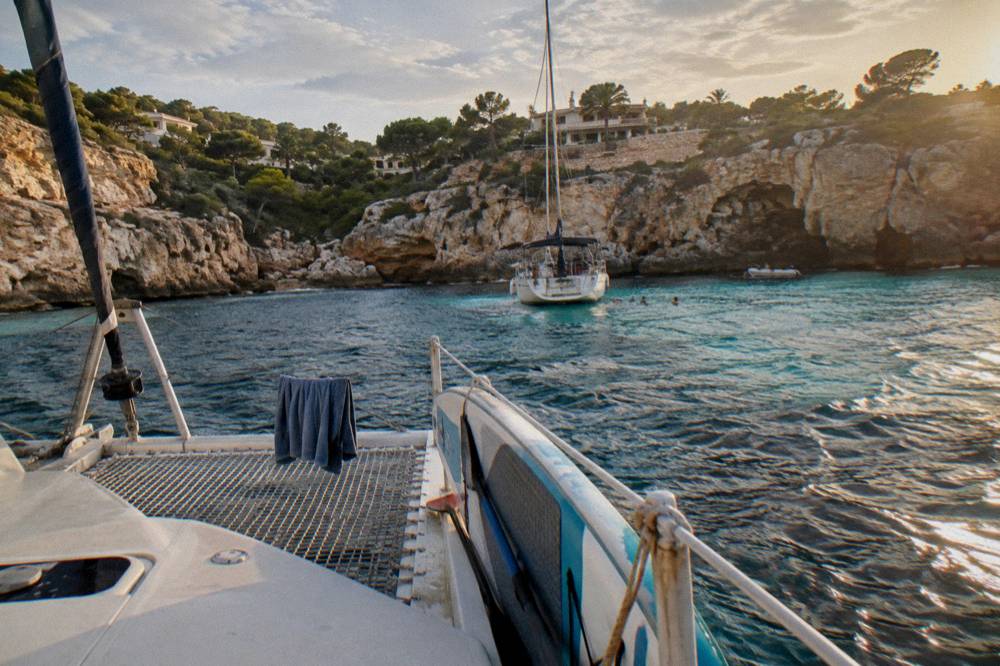
Where Do You Board, And What Should You Carry There?
The covered listings depart from Palma's waterfront piers, Port d'Alcudia, Port de Pollenca and Cala Ratjada, so you are walking a marina promenade, not climbing a gangway at sea: flat shoes, sun on the walk, and nothing you cannot carry 10 minutes. Only two listings state hotel pickup, the Arenal cruise and the Pollensa Bay tour.
The boarding walk is the part of the day people plan least and regret most. In Palma, departures cluster along the Paseo Maritimo and the Muelle de Golondrinas near the Auditorium, a waterfront that was redeveloped over 3.5 kilometres with far more pedestrian space and over 1,800 new trees, work that won a national sustainable construction prize. Translation for packing: it is a pleasant, exposed, 5-to-15-minute walk from most central hotels or taxi drops, in full sun. The cap and the water bottle earn their keep before you board, not after.
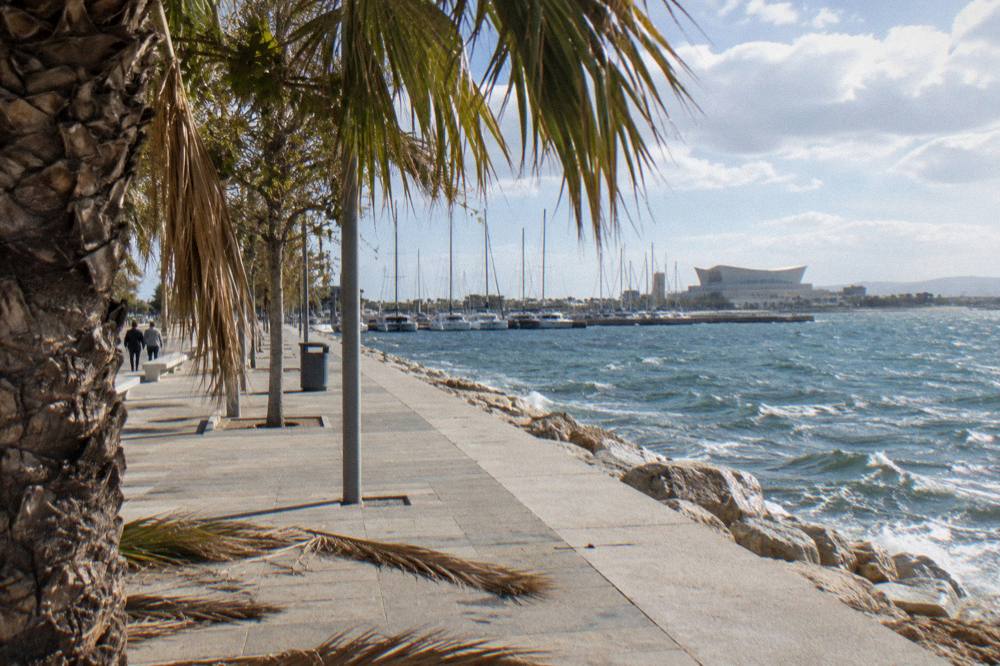
The north-coast departures are similar promenade walks: the Alcudia cruises leave from the Transports Maritims BRISA pier on the Passeig Maritim, and the Pollensa Bay tour from Muelle Nuevo in front of Restaurant Stay. Cala Ratjada's trip departs from the pier on Carrer Ingeniero Gabriel Roca. None of these involve tender boats or stairs at sea, so a normal day bag works. What to carry in it:
| Item | Why | Note |
|---|---|---|
| Swimsuit worn under clothes | Swim stops on the Palma snorkel cruise and the Alcudia lunch cruise | Saves a changing-room gamble |
| Towel | Bring your own | €8 on the DJ tour if you forget |
| Dry bag with change of clothes | Return leg after swimming | Zip-top beats plastic |
| Sunscreen, high factor, plus lip balm | Deck reflection intensifies sun | Reapply after swimming |
| Cap and sunglasses with cord | Constant sun, constant wind | Cord saves the sunglasses |
| Water bottle, 1 litre per person | Drinks policies vary by listing | Free to bring, always useful |
| Card or small cash | Snorkel deposits, bar, gratuities | €10 deposit on one listing |
| Motion-sickness remedy | Catamarans are stable, but carry it | Take before boarding |
| Phone in waterproof case | Photographer listed on one tour only | Floatable case preferred |
Keep valuables minimal. None of these catamaran tours list hotel pickup. Plan on making your own way to the pier. Taxis in Palma, Alcudia and Pollensa are plentiful and the piers are well known; allow a relaxed margin, because the boats do not wait.
Common Questions About Packing For A Catamaran Tour
Do I Need To Bring Snorkel Gear On A Mallorca Catamaran Tour?
Not usually. The listings covered here either include snorkel equipment or sell it on board; the Gourmet Buffet tour from Palma charges €20 for gear as a listed exclusion. Bring your own mask only if fit matters to you or you wear glasses.
Are Towels Provided On Catamaran Tours In Mallorca?
Generally no. Some listings note towels as an extra or exclusion, while most do not mention them at all, so do not count on towels being provided: pack one per person. Pack one per person.
What Should I Wear On A Catamaran Tour?
A swimsuit under light clothing, flat slip-off shoes, a cap, sunglasses and a dry layer for the sail back. There is no dress code on any listing covered here, and you will be barefoot on deck for most of the trip.
Is Food And Drink Included On Mallorca Catamaran Tours?
On the shared sails, mostly yes: the listings name buffets, BBQs and Mallorcan lunches with varying drink policies, from wine and sangria included to water only. Check your own listing's inclusions and exclusions lines, which is where the difference lives.
What Shoes Should I Wear To Board A Catamaran?
Flip-flops or espadrilles you can slip off at the gangplank. The departure points are marina promenades in Palma, Port d'Alcudia, Port de Pollenca and Cala Ratjada, so the walk is flat but sunny.
Should I Bring A Wetsuit For The Swim Stop?
Only in the shoulder months. Average sea temperature near Palma is 18.9 degrees Celsius in May and 22.7 in October, against 24.8 in July. From June through September a swimsuit is enough for most people.